
Miami’s heat, heavy rain, and tropical storms can gradually wear down roofing materials. If your roof has recurring leaks, damaged shingles, or visible signs of aging, replacement may be the most practical long-term solution. A professional assessment can help determine the roof’s condition, explain suitable materials, and outline the work needed to protect your property.
Roof Replacement in Miami makes sense when damage reaches across the roof or the surface beneath it can’t support a lasting repair. A leak or a missing tile alone doesn’t settle the question. The condition of the whole roof does.
If water shows up in one room, it’s tempting to focus on that spot. But water can travel before it reaches a ceiling. The stain tells you there’s a problem, not how much of the roof needs work. The same goes for damage you can see from the ground: one broken tile may be isolated, while several damaged areas may point to a wider problem.
What matters most is whether a repair can leave the rest of the roof sound. These signs deserve a closer look:
None of those signs proves you need a new roof by itself. A roof can have several visible trouble spots and still need a careful check before anyone can say whether replacement is the right call. On the other hand, repeatedly patching separate areas can leave you paying to chase leaks while the broader condition goes unanswered.
Miami’s intense sun, tropical rain, and storms make that distinction important. A dry-looking ceiling doesn’t tell you what’s happening under damaged roofing. A roof that looks worn from the street may still have areas that are sound. You need to know where the damage starts and ends, not just where it first caught your eye.
At Tropico Roofing & Construction LLC, our estimators and field inspectors evaluate roof conditions, document them with photos and aerial measurements, and identify structural issues when preparing a scope. That gives you something concrete to review: which areas are affected, what’s beneath the visible damage, and why a full replacement is being considered instead of a limited repair. If the evidence points to one isolated problem, a patch shouldn’t be treated as a whole-roof failure.
Repair is enough when the damaged area is limited and the surrounding roof is still sound. The question isn’t whether the roof has any wear. Most roofs do. It’s whether fixing the affected part will leave you with a roof you can reasonably rely on. If it will, replacing everything now may be more work than you need.
The cause matters as much as the size of the problem. A small leak near a vent or roof edge may come from one failed detail rather than the roof covering as a whole. Likewise, a few shingles loosened by wind don’t automatically mean the entire roof has failed. A useful repair plan should identify the source of the trouble and account for the condition of the materials around it. Covering the place where water showed up, without addressing where it entered, doesn’t settle the issue.
Flat roofs call for the same judgment, though the trouble may be harder to spot from below. A limited defect may be repairable if the nearby surface remains sound. But a proposal to fix one spot should make sense in light of the roof’s overall condition, not just the most visible mark. That distinction matters in Miami, where tropical rain can make a weak area apparent without telling you whether the weakness is local or widespread.
Replacement can also wait when you’re planning ahead rather than dealing with a confirmed failure. If an older roof is still performing and an evaluation finds no wider damage, age alone isn’t a reason to commit to a new one today. The same is true of discoloration or appearance changes that don’t affect how the roof keeps water out. You can keep records of what was found and use that information later, rather than treating a rough-looking surface as proof it must go.
Before you choose a repair, make sure you understand its limits. Ask what part of the roof the proposed work addresses, what condition the adjoining material is in, and whether any areas couldn’t be evaluated. If the answer is clear and the rest of the roof is sound, you don’t need to turn a contained problem into a full replacement. If the scope leaves the cause uncertain, get a clearer assessment. Don’t assume the biggest job is the right one.
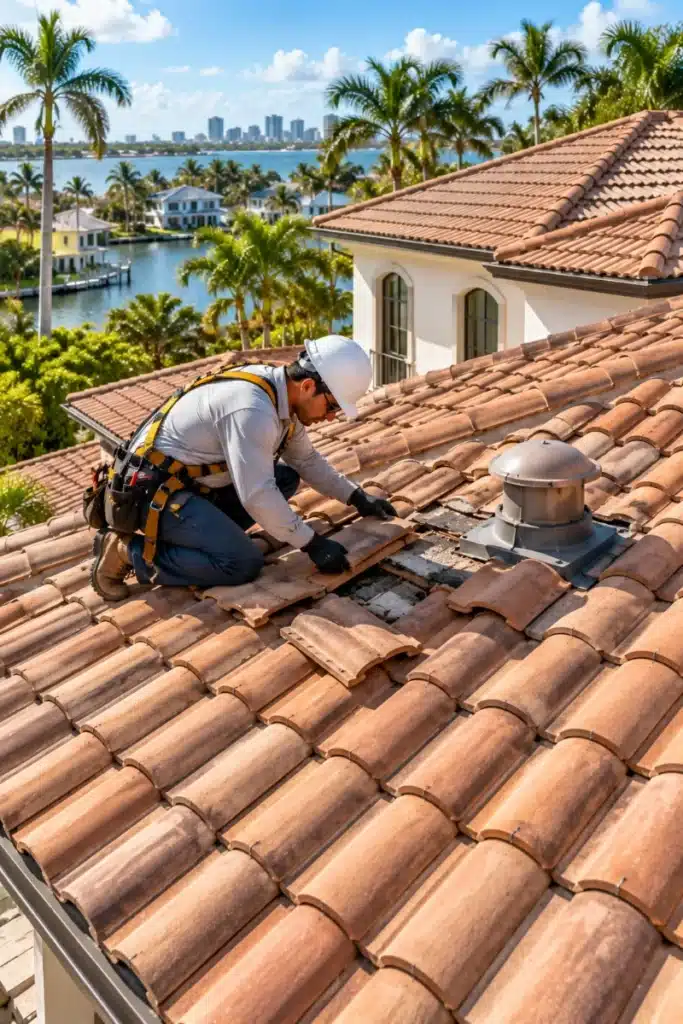
A new roof in Miami has to do more than stop today’s leak. Miami-Dade is a High-Velocity Hurricane Zone, or HVHZ, so the replacement needs materials and an installation plan that meet the requirements that apply to the property. That’s why the right choice isn’t just the tile, shingle, metal, or flat-roof surface you can see. It’s the complete system proposed for your building.
When you review a replacement proposal, ask which Miami-Dade Notice of Acceptance, or NOA, or Florida Product Approval applies to the proposed materials. Then ask how the listed products and installation method fit together. An approval for one product doesn’t, by itself, tell you whether every part of the proposed roof is right for your building. Details such as the roof’s shape, the condition of the deck, and the way the covering is attached affect the scope.
The permit question depends on the property’s location, not the roofer’s office address. Tropico Roofing & Construction LLC is based in unincorporated Miami-Dade County, where Miami-Dade RER handles permitting. Don’t assume that office jurisdiction tells you which authority handles your roof. Confirm it for the building where the replacement will happen, and make sure the proposed work matches the permit package.
This matters most when a simple-looking material choice hides a larger decision. You might like the look of a certain tile, but if the roof beneath it needs work, choosing tile first won’t settle what the replacement involves. The same goes for a flat roof: the visible surface is only part of the plan. A clear scope should tell you what’s being removed, what condition must be checked once it’s exposed, and how the approved replacement system will be installed.
Our estimators and field inspectors document roof conditions and identify structural issues when preparing scopes. Daryl Garcia Alfonso oversees quality assurance and compliance with applicable Miami-Dade HVHZ requirements, while our permitting coordinator handles permit packages and inspection coordination. Florida Certified Roofing Contractor license: CCC1333660. No approval makes a roof stormproof, but a proposal that identifies the system and addresses the roof beneath it gives you a sound basis for deciding what to install.
For a roof replacement on a property in unincorporated Miami-Dade County, Miami-Dade RER handles permitting. The useful question for you is whether the permit package describes the same roof, materials, and work that appear in your proposal. If those details don’t line up, you may have to sort out changes after the old roof comes off.
A proposal can look complete while leaving out a choice you still need to make. Say you’ve chosen a new tile roof, but the condition beneath the old tile won’t be clear until removal. You don’t need to guess how much decking might need work. You do need to understand how a finding like that would affect the scope, paperwork, and your approval of added work.
At Tropico Roofing & Construction LLC, our administrative and permitting coordinator handles permit packages, Notice of Commencement filings, and HOA coordination. Our field superintendents and crew foremen handle inspection coordination and client progress updates. Ask us to walk you through the scope before you approve it, then keep a copy of the proposal and any agreed changes so you can follow what’s being submitted and built.
Don’t plan around a promised permit date. The time needed can depend on the application and any questions raised during review. Before scheduling around the job, ask what’s been submitted, what’s been approved, and what remains open. That gives you a clearer picture than a guessed start date.
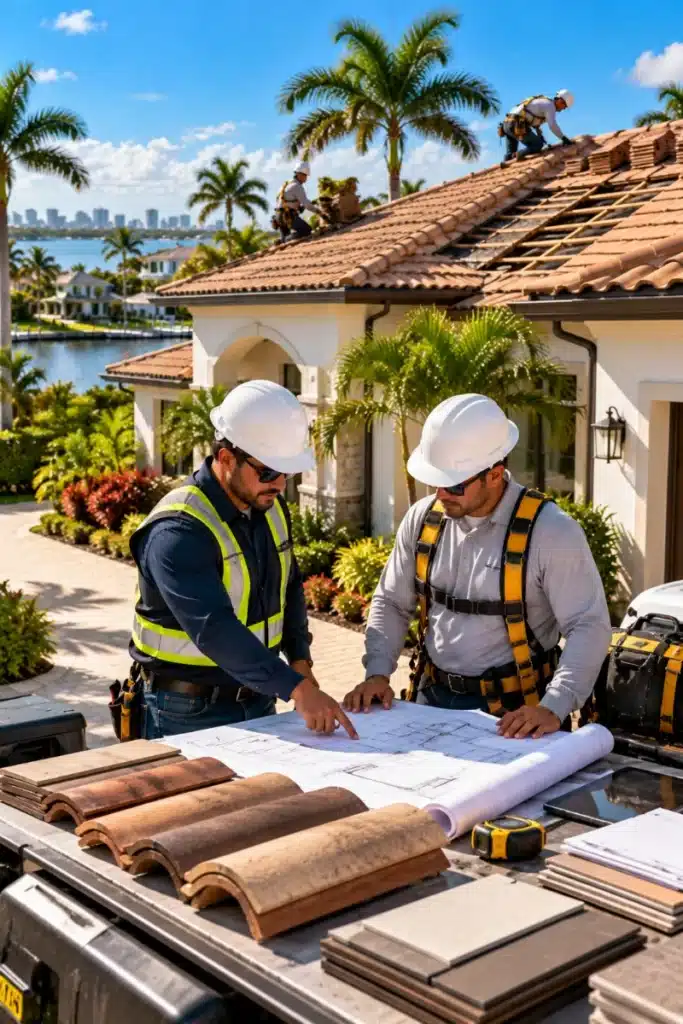
The cost of a roof replacement depends on more than the material you see from the street. Roof size matters, but so do the amount of old roofing to remove, the condition beneath it, and how much work it takes to install the new system. If two estimates are far apart, don’t assume one contractor measured wrong. First, check whether they priced the same work.
Some roofers present one total price. Others break the job into line items or price part of it by roof area. Either format can be useful if you can tell what’s included. Look for the roofing system, removal, disposal, known work beneath the covering, and permit-related costs. Then ask what isn’t included. An estimate that leaves out necessary work may look cheaper today but won’t give you a fair comparison.
Pay close attention to how the proposal handles unknown conditions. You shouldn’t be asked to approve an open-ended amount for decking that no one can see yet. Ask how you’ll be shown a problem after removal and how the cost of added work will be calculated before you approve it. That doesn’t mean every hidden condition can be priced in advance. It means you’ll know how the decision will be made.
If you’re comparing a tile proposal with a shingle proposal, compare the full scopes, not just the covering. If you’re comparing two proposals for the same material, check whether both include the same removal, roof details, and plan for hidden damage. Tropico Roofing & Construction LLC’s estimators prepare scopes and review estimates with clients. Ask them to explain what each part covers so you can choose based on the work your roof needs, not just the lowest number.
It's a Florida Building Code concept that can require a full roof replacement instead of a repair. If 25% or more of a roof is damaged or being repaired within a 12-month period, code may require the whole roof section to meet current standards, not just the damaged part. This is a general rule, so ask your inspector whether it applies to your specific roof and damage.
There's no single answer, since roof cost depends on material, roof size, pitch, and how much decking needs replacing. A number by itself doesn't tell you what's included. Ask for a documented estimate that itemizes tear-off, disposal, deck repair, and permit fees so you can judge whether the price fits the actual scope of your roof.
Programs like this can change over time, so confirm current availability directly with the state or your county rather than assuming eligibility. Wind-mitigation or grant programs have existed in Florida before, but details and requirements shift. Check with Miami-Dade County or the state directly for what's currently offered before counting on any assistance.
Tropico Roofing & Construction LLC provides roof replacement services in Miami and unincorporated Miami-Dade County. Each project is evaluated for roof condition, access, applicable HVHZ requirements, permitting needs, and the scope required for your building.
Roof repair, waterproofing, replacement, and residential roofing.
Our Broward County location is at 860 W Dayton Cir, Fort Lauderdale, FL 33312.
Residential and commercial roofing services, repairs, replacements, and flat roofs.
Residential roofing, commercial roofing, roof repairs, and maintenance.
Roof repair, replacement, flat roofing, tile roofing, metal roofing, and commercial roofing.
Residential roofing, roof repair, replacement, maintenance, and storm damage work.
Roof repairs, inspections, replacements, and storm damage roofing.
Residential and commercial roofing, flat roofing, replacement, repair, and maintenance.
Roof inspections, repairs, replacements, and storm damage services.
Residential roofing, roof leak repair, replacements, inspections, and maintenance.
Residential roof repair, replacement, inspection, and maintenance.
Roof replacement, residential roofing, leak repair, tile roofing, and commercial roofing.
Roof repair, roof replacement, tile roofing, metal roofing, flat roofs, and inspections.
Have questions about your roof’s condition, replacement options, or Miami-Dade permitting requirements? Contact Tropico Roofing & Construction LLC to discuss your property, review the proposed scope, and learn what information is needed to prepare a roof replacement estimate.
