
Copper roofing in Miami, FL can bring a distinct look to a roof or highlight an architectural detail. Tropico Roofing & Construction LLC provides copper roofing solutions for projects that call for this material. Share your address and show us where you want to use copper. A photo from the ground or a set of plans can help us review the project.
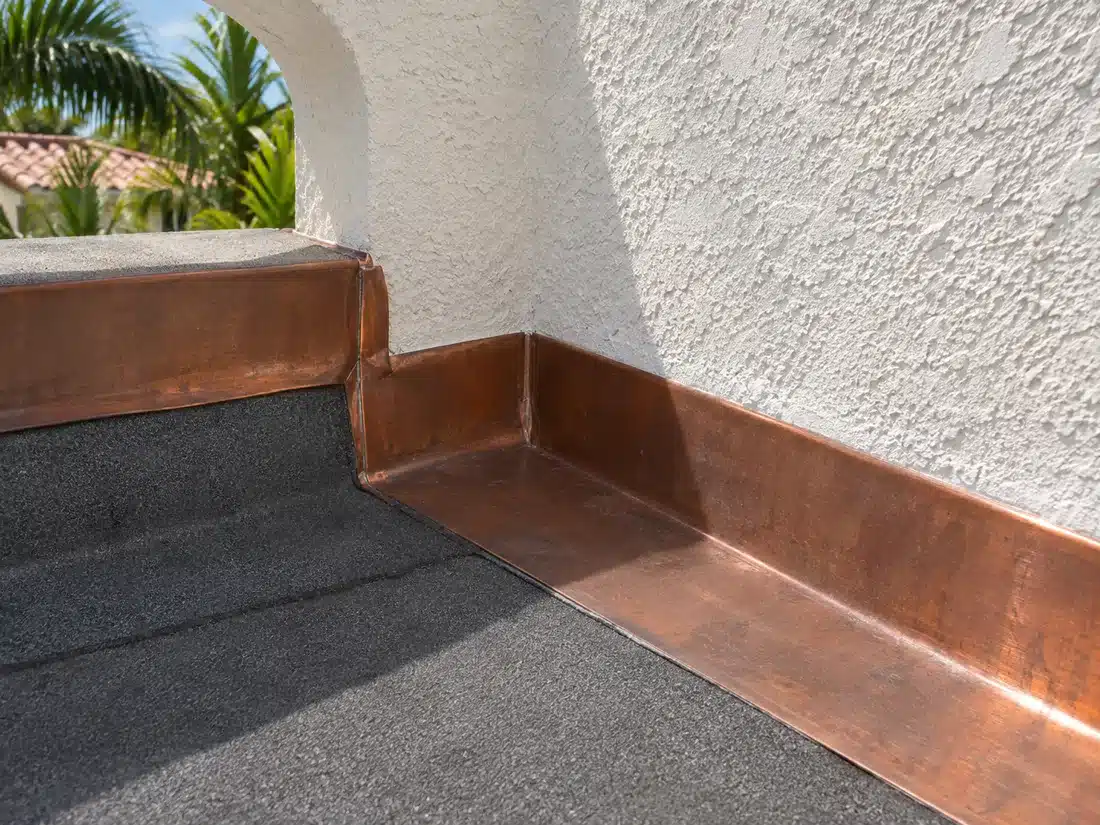
Bare copper starts bright and can turn brown before it takes on a greenish patina. Patina is the surface layer that forms as copper ages. A shaded porch cover can change at a different pace from a roof panel that gets more sun and rain. If you add new copper next to old copper, expect a color difference at first. Ask to see examples at more than one stage of aging.
South Florida’s wet season brings frequent showers and storms. Before you choose a copper accent, check where water will leave its lower edge. Runoff can leave marks on some light, porous stone. It can also speed up wear on aluminum in its path. Tell us if the home is near Biscayne Bay or if the water drains into an existing aluminum gutter.
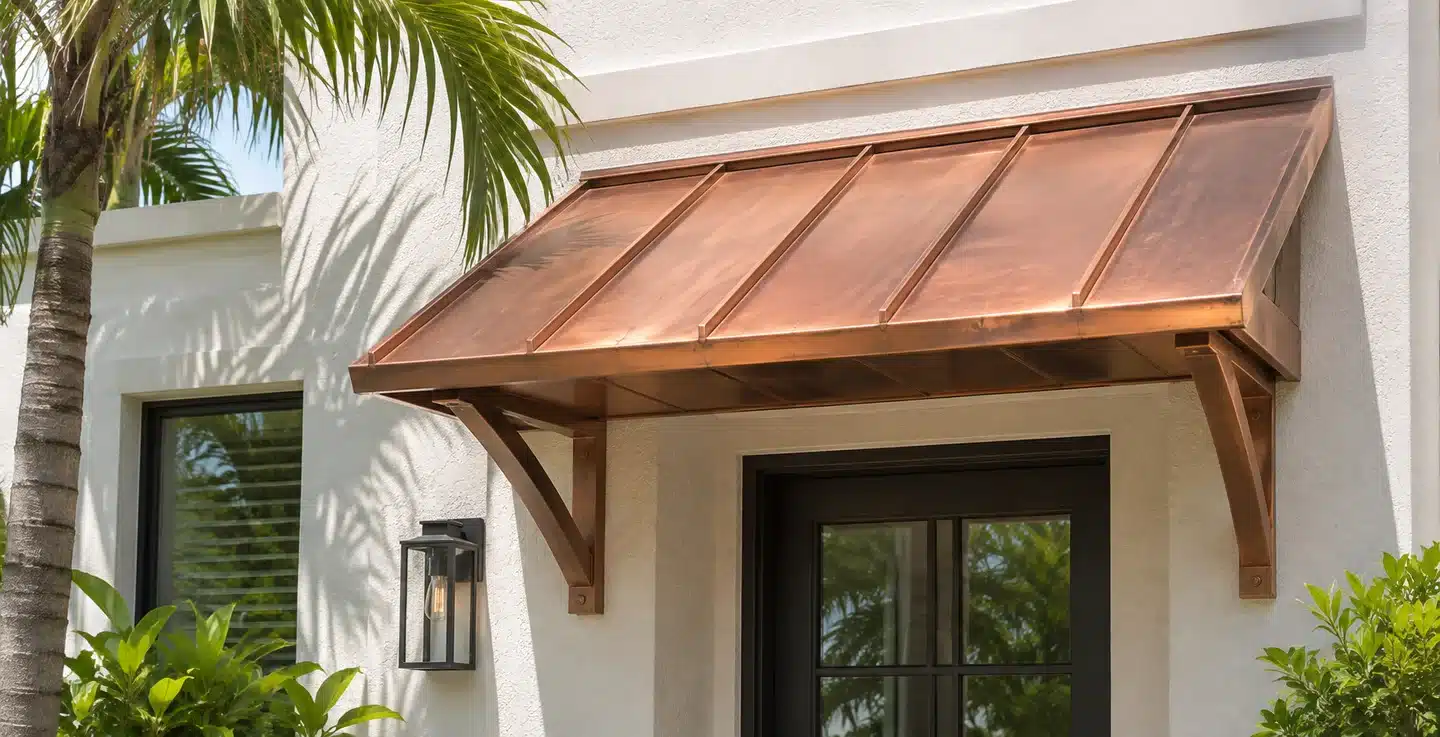
Copper can cover a visible roof section or highlight a smaller detail. Which use fits depends on the roof, the materials around it, and where water will drain.
Copper can cover a visible section of roof. Ask to see a sample of the metal and the seam. The slope, roof deck, and way the panels attach determine which options fit the project.
Look at the detail from the street and check what sits below it. A light wall, stone step, or gutter may be in the path of runoff. That can affect where the copper makes sense.
Copper flashing can help guide water away from joints. Where copper meets tile or another metal, include that transition in the scope and review where the water will drain.
Start with the exact street address. A Miami mailing address can fall outside the City of Miami. For a property in the city, use its permit history search to look for the last roof permit and any final inspection. If the property is in unincorporated Miami-Dade, use the county’s building portal. Save the permit number or bring a copy when you ask for an estimate.
Miami-Dade is in Florida’s High-Velocity Hurricane Zone. For work that needs a permit, ask which Miami-Dade Notice of Acceptance or Florida Product Approval applies to the exact system, including the pitch, roof deck, and attachment.
If the property is historically designated in the City of Miami, ask the preservation office about a Certificate of Appropriateness before ordering the material. Bring photos of the roof and the proposed change.
Show us where the copper would go. For a small accent, take one photo from the street and one from the side so we can see where it meets the main roof.
The pitch, roof deck, and nearby materials shape which details work. Ask whether you can keep the gutter or flashing already in place.
Review where the copper meets walls, valleys, and other roof surfaces. Ask where water will leave the roof and whether those details are included in the quote.
Ask what gets removed, what stays, who handles permits and inspections, and what could change if crews find damaged decking. Ask how the roof will be protected if a storm interrupts the work.
The amount of copper, the time to shape corners and valleys, access, removal, deck repairs, and permit needs affect the price. Ask each bidder to list the metal, the area it covers, and the transitions included. A small accent can still need custom pieces.
Ask what workmanship coverage applies and whether the selected system has a separate material warranty. Find out who provides each warranty, what it covers, and what care it requires. If you keep an existing gutter, ask how that affects coverage at the joint.
It can be painted steel or aluminum. Ask the estimate to name the actual metal and finish so you can compare offers and know how the surface may look over time.
Expect a difference in color when the new piece goes in. Photos of the old piece and samples of the new metal can help you decide where the color change will be most visible.
Have the joint and the path of the water checked first. Direct contact and runoff can both affect aluminum. Include the gutter in the scope so you know whether it can stay.
It depends on the measured pitch and the proposed system. Ask which installation details and approval apply to that part of the roof before choosing a panel.
Send your property address, a photo from the ground, and the area you want to cover. If you have plans, old roof records, or a photo of the copper detail you like, send those too.
Planning a copper entry cover in Westchester, a roof detail in South Miami, or a larger project near Coral Gables? Tell us where you want the copper and what’s there today. We’ll review the request with you and explain what we need to price the work.