
Metal roofing installation in Miami, FL from Tropico Roofing & Construction LLC starts with the right panel system, attachment method, underlayment, and roof details for the property. A metal roof is more than sheets of metal. The deck, clips or fasteners, seams, underlayment, flashing, valleys, edges, ridge details, and penetrations all have to work as one approved roof system. We install qualifying metal roofing systems for residential and commercial properties throughout Miami and nearby Miami-Dade communities.
Metal roofs can look similar from the street while using very different attachment systems.
The panel profile affects:
Depending on the building and approved system, metal roof options may include standing seam, 5V-crimp, or other qualifying metal panel systems.
The right choice depends on the property and approved roofing assembly.
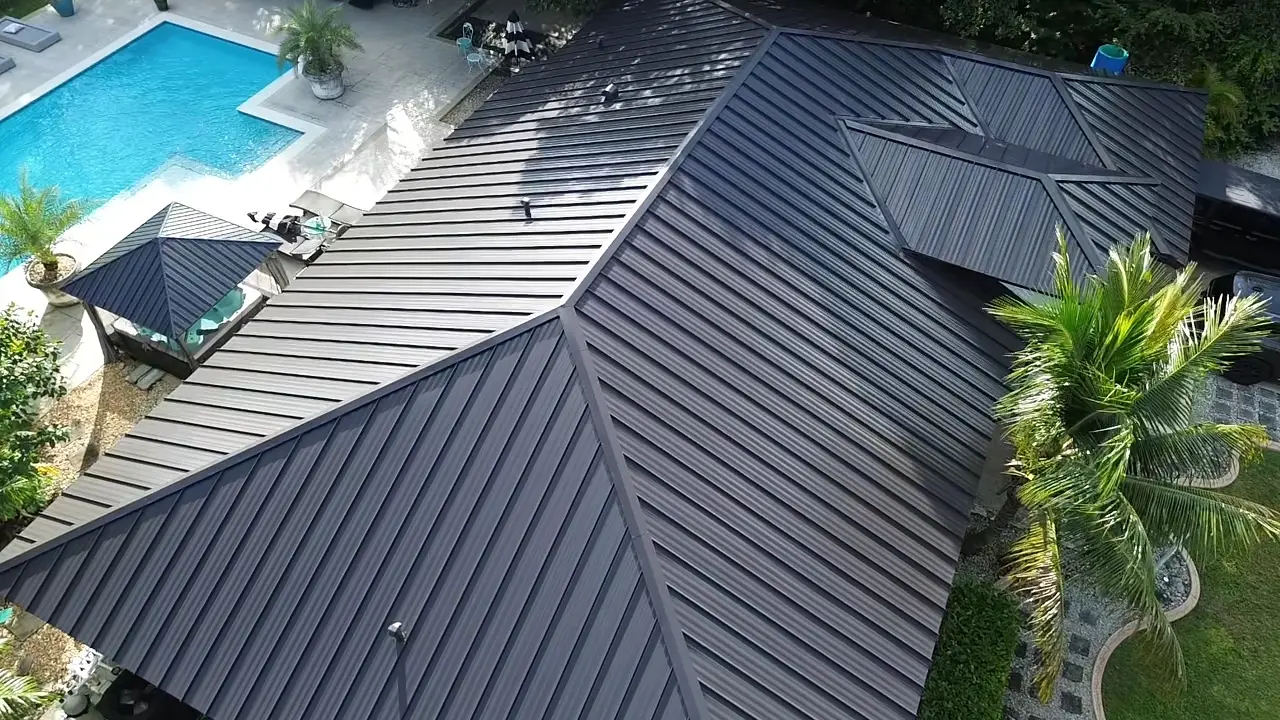
Standing seam metal roofing uses raised seams between panels.
Many standing seam systems use concealed clips or attachment points below the finished panel surface.
That creates a roof with long vertical lines and fewer visible fasteners through the main panel field.
A standing seam installation can involve:
The exact panel, seam, clip, and attachment pattern depend on the approved system.
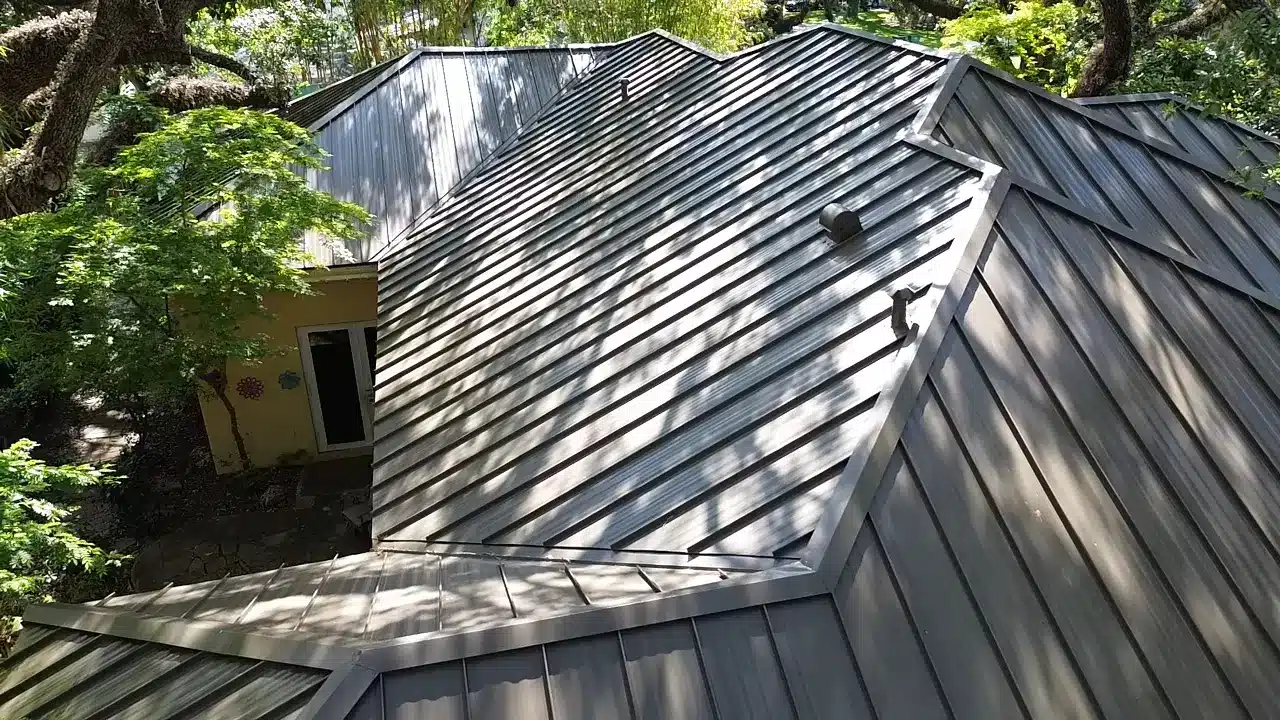
Some metal roofing systems use exposed fasteners.
5V-crimp is one example commonly associated with Florida roofing.
Unlike many concealed-fastener standing seam systems, fasteners may remain visible on the finished roof.
Do not choose a system only because two panels look similar.
The installation details matter.
The fastener method changes how the panel attaches to the roof.
Fasteners or clips are covered by the finished panels or seams.
These systems can allow the roof surface to maintain a cleaner appearance.
Fastener heads remain visible through the panel surface.
They use a different approved attachment pattern and roof detail.
Neither label alone tells you whether a roof is right for your property.
The specific approved metal roof system is what matters.
Wind pressure is not the same across every part of a roof.
Metal roofing permit documents may separate the roof into areas such as:
The main interior area of the roof.
Areas closer to the roof edges.
Roof corner areas that can experience higher uplift demands.
The approved panel system may require different clip or screw spacing in these zones.
That is one reason metal roofing installation in Miami cannot be reduced to “screw down the panels.”
The attachment pattern has to match the approved roof system and project requirements.
Miami-Dade is inside Florida’s High-Velocity Hurricane Zone, also called HVHZ.
Metal roof systems used here must meet the requirements that apply to the project.
Miami-Dade Product Control maintains Notices of Acceptance for qualifying roofing products and assemblies.
A metal roof approval can identify details such as:
The approved assembly matters more than a product name by itself.
Metal roofing depends on the roof below it.
The approved system can specify which deck or substrate the panels may be installed over.
Depending on the property, that can involve:
Existing roof conditions can also affect the installation.
If damaged decking is uncovered during applicable roofing work, it may need to be addressed before the metal roofing system continues.
Metal panels are the visible part of the roof.
Approved systems may also require underlayment below the panels.
The underlayment type and attachment method depend on the roofing assembly and current requirements.
Some systems may also include an approved peel-and-stick membrane or another water-control layer.
The correct material should be selected as part of the roof system.
Not added as an afterthought.
Metal roofing panels join together along seams.
Those seams can vary by system.
Some standing seam systems may use snap-lock or mechanically seamed profiles.
Other metal roofing systems use different connections.
The approved installation instructions can control:
The seam is part of the tested roof assembly.
Eaves and rake edges are not minor finishing details.
Metal roofing permit information can include specific requirements for:
These components help connect the panel system to the roof perimeter.
A finished metal roof should have edge details that match the approved roofing system.
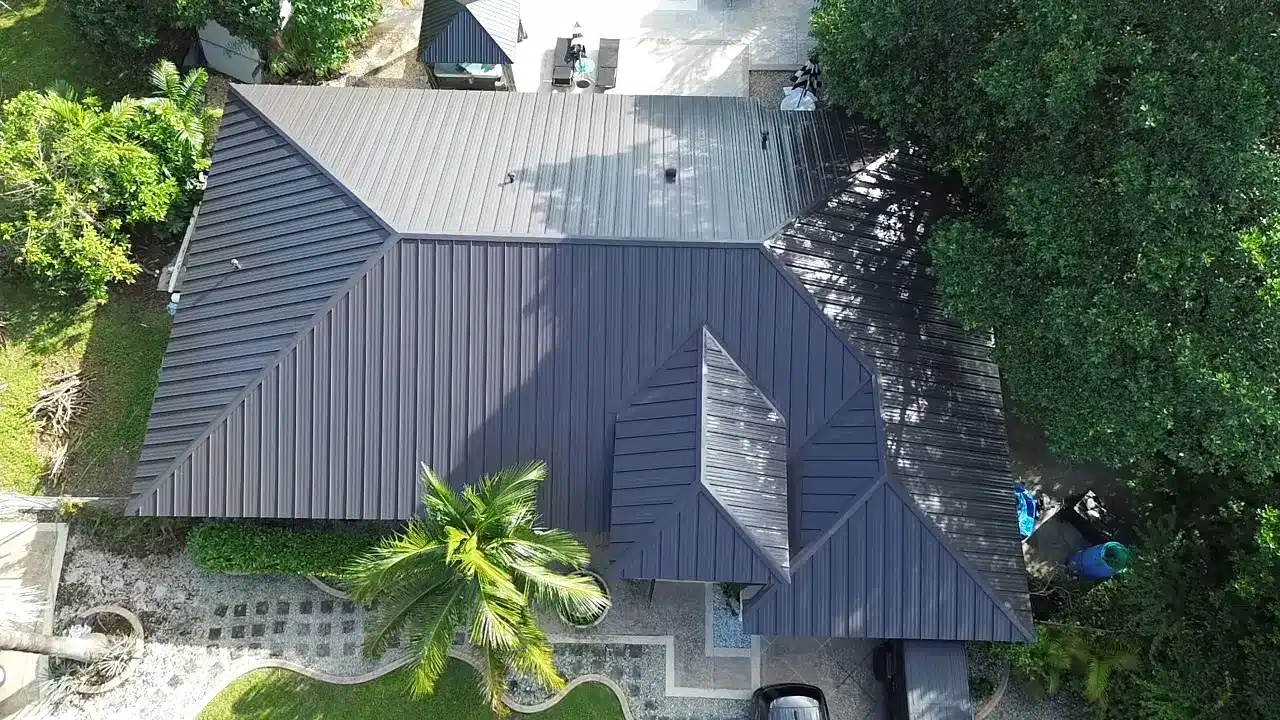
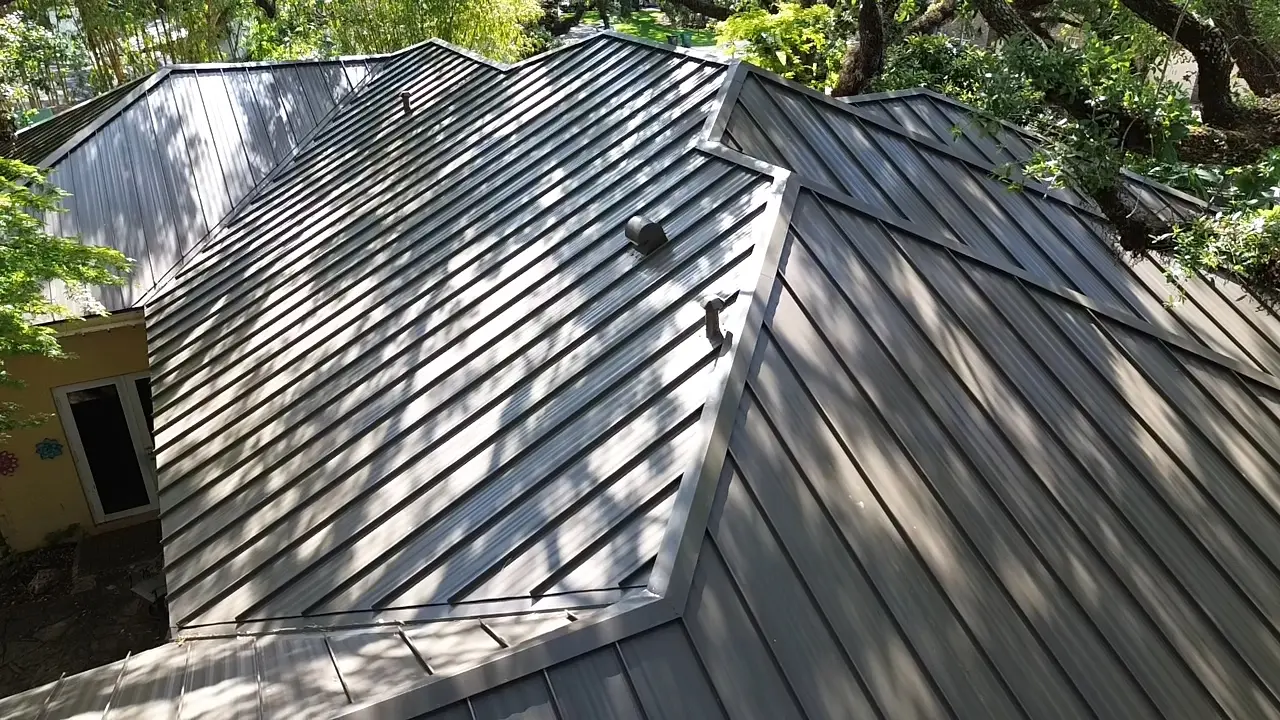
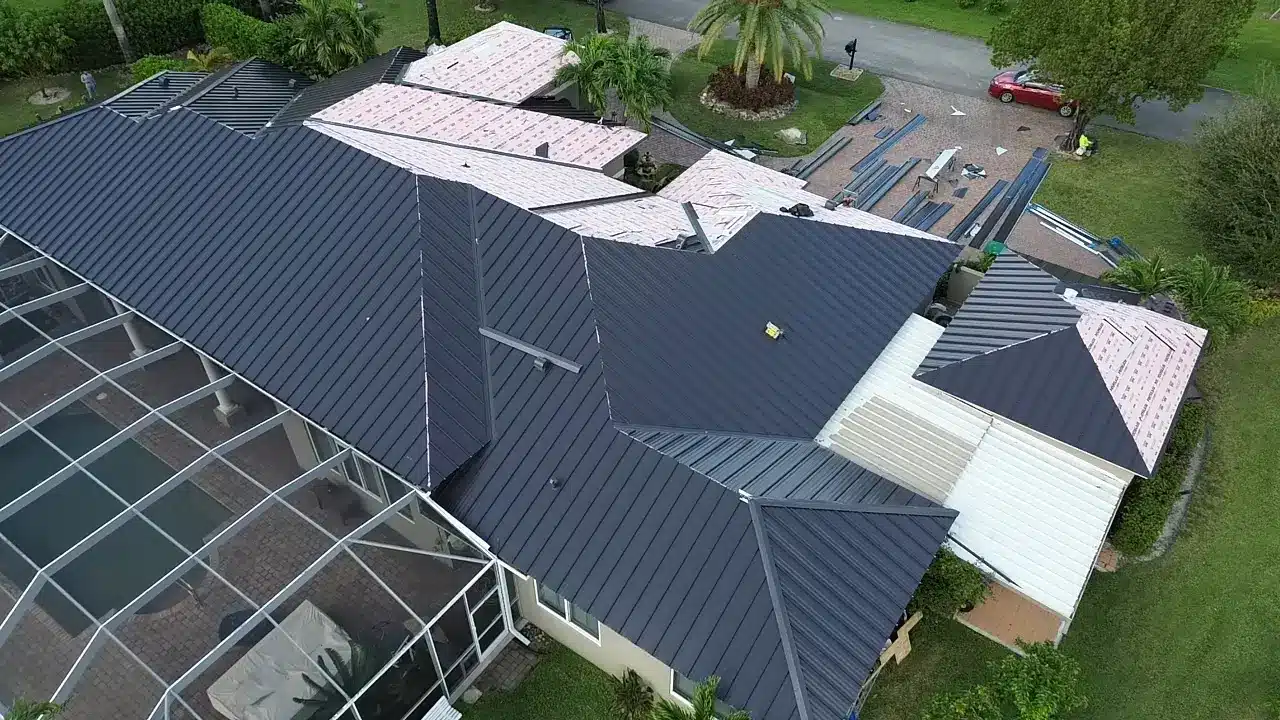
Miami homes often have hip roofs, valleys, multiple roof sections, and changes in direction.
Metal roof installation has to account for these shapes.
The project may include:
These areas should be included in the installation scope before materials are ordered.
Flashing helps metal roofing transition around walls and roof openings.
Depending on the building, metal roof flashing may be needed around:
The flashing detail should match the approved panel system.
Properties throughout Miami-Dade can face different environmental conditions.
A home farther inland may not have the same exposure as a property close to Biscayne Bay or the coast.
When choosing metal roofing, factors can include:
The material and finish should fit the property's actual location.
Different approved roof panels can use different metals.
Options may include:
Steel roofing panels may use protective coatings designed for roofing applications.
Aluminum systems are also available for qualifying roofing applications.
The right option depends on the approved system, property location, roof design, project goals, and manufacturer requirements.
Tropico Roofing can review qualifying systems before the installation scope is finalized.
Miami roofs receive strong sun for much of the year.
Metal roofing is available in many colors and finishes.
Roof color and coating can affect how much solar energy the roof surface absorbs or reflects.
But color is only one part of the decision.
The roof system still needs the correct:
Choose the roof system first.
Then choose the finish that fits the property.
South Florida's wet season brings frequent showers and thunderstorms.
Metal roof installation can involve removing existing roof materials, preparing the deck, installing underlayment, and placing new panels.
The work plan should consider:
No roofing contractor controls the weather.
The project should be planned around actual site conditions.
Metal roofing can work with many home styles.
Residential metal installation may be considered for:
Before installation, the roof design, deck, panel system, drainage, penetrations, and approved assembly should be reviewed.
Tropico Roofing provides qualifying residential metal roof installation throughout Miami-Dade.
Metal roofing can also be used on qualifying commercial buildings.
Commercial projects may involve:
The approved roofing system should match the building.
Miami-Dade uses a specific Metal Roof System permit section.
Project information can include:
The exact building department depends on the property location.
A property in unincorporated Miami-Dade may follow the county permit process.
Properties inside cities such as Doral, Coral Gables, South Miami, or other municipalities may use their local building department.
Miami-Dade Product Control records include expiration dates and revisions.
That means a metal roof system that was approved years ago should not automatically be assumed to be current today.
Before the permit is prepared, the selected panel system and related products should be checked against current requirements.
The project should follow the code and approvals in effect at the time of permit.
Florida is transitioning to a new edition of the Florida Building Code.
Because roofing rules and product approvals can change, this page does not lock your project to one code edition.
Instead, Tropico Roofing reviews the requirements that apply when the permit is prepared.
This helps keep the roof scope tied to the current rules rather than old website language.
Metal roofing installation can happen in more than one situation.
The metal roofing system is installed as part of a new building or addition.
An existing roofing system may need to be removed before the metal roof can be installed.
Some qualifying properties may move from another roof material to an approved metal roofing system.
Each starting point can change the preparation, permit documents, deck work, and installation scope.
Tile, shingles, and metal roofing are different systems.
One is not automatically right for every Miami home.
When comparing options, consider:
If you have not decided on the roofing material yet, Tropico Roofing can review the options that fit the property.
The estimate should identify the type of metal roofing being installed.
The system should match the approval required for the project.
Deck conditions affect the installation.
This changes the roofing system and its details.
These items should be part of the scope.
We look at the roof shape, slope, deck, property type, and project goals.
The panel profile, material, and approved assembly are reviewed.
Edges, valleys, ridges, flashing, penetrations, and ventilation where applicable are planned.
The current product approval and metal roofing permit information are checked.
The deck and roof surface are prepared based on the approved scope.
The required layers, panels, clips or fasteners, seams, flashing, and edges are installed.
Applicable inspections are coordinated for the permitted project.
The completed work is checked against the approved roofing scope.
License CCC1333660
**10720 SW 40th St, Suite D
Miami, FL 33165**
We work with qualifying residential and commercial metal roof projects.
Our roofing services also include deck work, underlayment, flashing, ventilation, roof edges, and other parts of the roofing assembly.
Ask which warranty terms apply to your qualifying metal roofing installation.
Financing may be available for qualifying roofing projects.
Residential metal roofing and qualifying roof conversion projects.
Metal roofing installation for qualifying residential properties.
Residential metal roof systems and new roofing projects.
Metal roofing installation for homes and qualifying commercial properties.
Residential metal roofing projects.
Metal roofing for qualifying residential properties.
Residential and commercial metal roofing.
Metal roof installation for qualifying homes.
Residential and commercial metal roofing projects.
Metal roofing for qualifying residential and commercial properties.
Residential and commercial metal roof installation.
Metal roofing systems for qualifying homes and businesses.
Residential metal roof installations and qualifying roof conversions.
Metal roofing for qualifying residential properties.
Helpful project details include:
You do not need to know which metal roof system is right before calling.
That decision can be part of the project review.
A metal roof should not be chosen by color alone.
The panel, deck, attachment, seams, underlayment, edges, flashing, and roof shape all affect the finished installation.
Tropico Roofing & Construction LLC provides metal roofing installation in Miami, FL for qualifying residential and commercial properties.
Tell us about your building and the metal roof you are considering.
We can help define the installation scope.
10720 SW 40th St, Suite D
Miami, FL 33165
Florida Certified Roofing Contractor — CCC1333660
Phone: (786) 234-5007